
Polymarket traders have pushed “Iran” to an 80% implied probability and fully resolved “Ship / Chip” at 100% as Donald Trump and Xi Jinping met in Beijing on May 14, with the $612,078-volume contract covering what words Trump would say during bilateral events with the Chinese leader.
The odds / market context
The “What will Trump say during bilateral events with Xi Jinping?” contract, which opened May 4 at $1.34M in total volume across all sub-markets, is now the clearest real-time scorecard for the summit’s flashpoints. Current implied probabilities as of May 14, 2026 (Beijing Time), based on Polymarket order books:
- Polymarket — Iran: 80% (up from 49% at market open; 24h volume: $143,666)
- Polymarket — AI / Artificial Intelligence: 78% (up from 40%; 24h volume: $130,142)
- Polymarket — Ship / Chip: 100% (resolved Yes; up 59 points on the day; 24h volume: $70,032)
- Polymarket — Tariff: 34% (24h volume: $77,853)
- Polymarket — Taiwan / Tibet: 30% (24h volume: $212,374 — the highest-volume sub-market)
- Polymarket — Strait / Hormuz: 44% (up 3 points; 24h volume: $46,472)
- Polymarket — Covid / Pandemic: 9% (24h volume: $38,378)
- Polymarket — Crypto / Bitcoin: 5% (24h volume: $145,540)
- Polymarket — Friend of mine: 22% (24h volume: $38,315)
The Taiwan / Tibet sub-market has drawn the largest trading volume at $212,374, reflecting how central that issue remains to traders’ risk calculus even as Iran dominates the probability headlines.
Driving factors
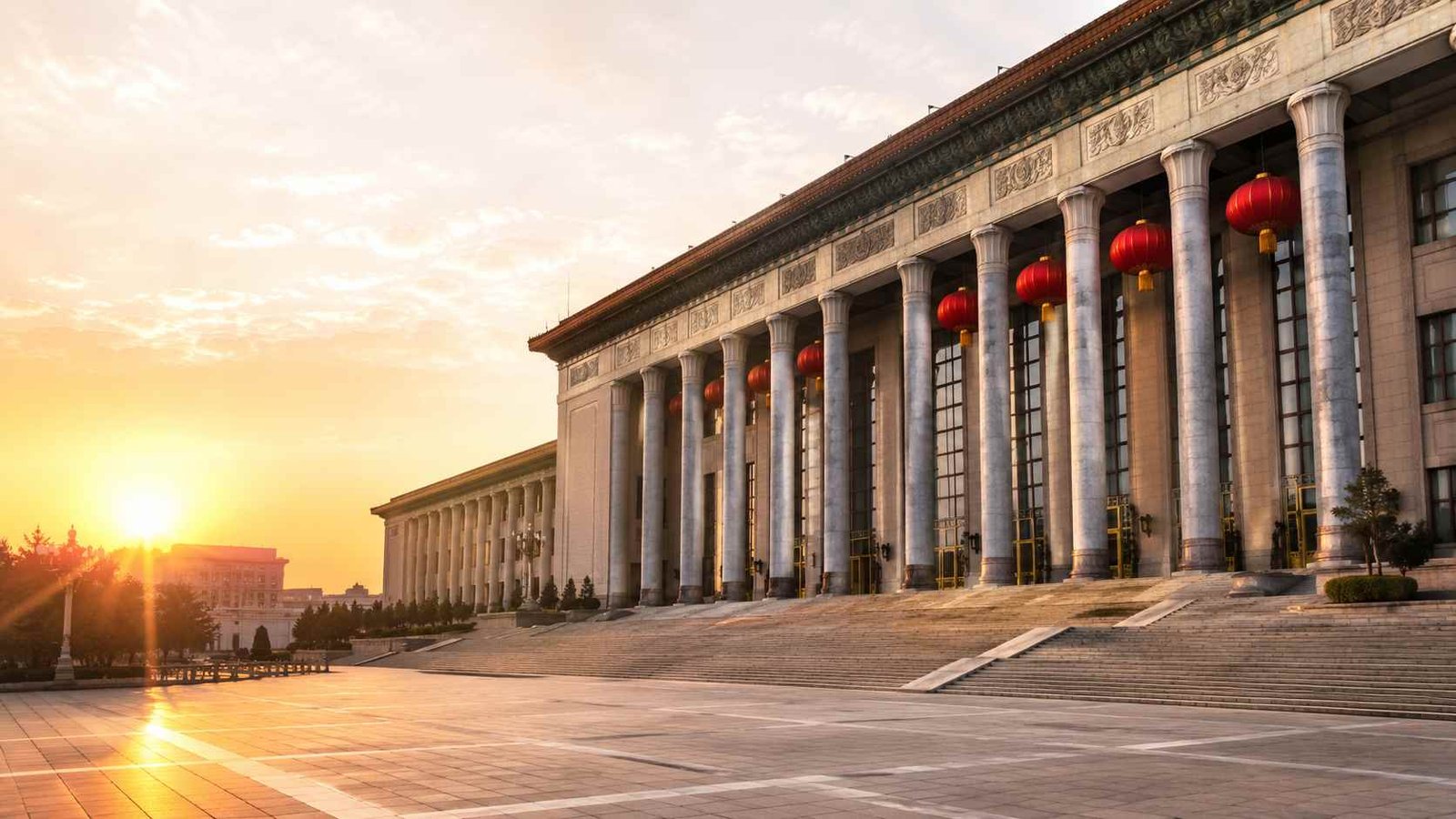
The Ship / Chip contract resolving at 100% reflects remarks already broadcast during Day 1 proceedings at the Great Hall of the People. The summit, Trump’s first in-person visit to Beijing since 2017, featured CEOs including Elon Musk, Tim Cook, and Jensen Huang, a delegation whose presence made semiconductor and chip-supply discussions structurally unavoidable.
The Iran surge to 80% tracks two converging triggers. A White House official confirmed, per a May 14 readout posted on its X account, that both sides agreed Iran must never obtain a nuclear weapon and that the Strait of Hormuz must remain open to global energy flows.
Xi also signaled interest in purchasing more U.S. oil as a hedge against Middle Eastern supply risk, according to reporting by Bloomberg on May 14. Those remarks, delivered in joint bilateral settings and therefore qualifying under the market’s resolution rules, are the most likely driver of the Iran contract’s near-vertical move from 49% at open.
The AI / Artificial Intelligence contract at 78% tracks similarly. U.S. restrictions on AI chip exports to China were one of the summit’s pre-announced agenda items, and the presence of Nvidia’s Jensen Huang in the U.S. delegation made the topic impossible to sidestep.
The Benzinga pre-summit analysis on May 13 had this contract at 74% before any remarks were made; the post-opening-ceremony move to 78% suggests traders heard at least a qualifying reference in the broadcast remarks, though full resolution awaits video review.
Why “Tariff” sits at only 34%
The tariff sub-market’s relative softness is notable given that trade was the summit’s headline topic. The resolution rule requires Trump to say the word “tariff”, not a synonym, in a joint event featuring Xi. Trump’s opening remarks, which focused on “reciprocal trade” and praised the bilateral relationship, may not have included the literal term.
The White House readout referenced trade deficit reduction and agricultural purchases without using the word “tariff” explicitly, per a May 14 Fox News live-blog summary. Traders appear to be pricing in meaningful uncertainty about whether a verbal trigger was actually pulled.
The Taiwan / Tibet contract at 30% is consistent with the White House’s own readout, which did not mention Taiwan at all, per CBS News reporting on May 14. China’s foreign ministry spokesperson Mao Ning separately confirmed that Xi stressed Taiwan’s centrality to the bilateral relationship, but those remarks were Xi’s, not Trump’s, and the market resolves on what Trump said.
For context on how Polymarket’s Trump-tariff markets have behaved during prior U.S.-China inflection points, see our analysis of the Supreme Court tariffs odds collapse.
What to watch?
Day 2 of the summit runs through midday Friday, May 15, Beijing Time. Any joint press appearance, Q&A, or broadcast banquet remarks still qualify for resolution. Trump’s invitation to Xi for a White House visit on September 24, delivered at the state banquet, signals the two sides intend further high-profile joint settings, though those fall outside this contract’s resolution window.
The Tariff (34%) and Taiwan / Tibet (30%) contracts remain live and sensitive to any transcript that surfaces from the closed two-hour-and-fifteen-minute bilateral session, which a White House official characterized as “good” without providing verbatim quotes. Video review, which the market specifies as the primary resolution source, is the determining variable before these contracts settle.
The full contract resolves no later than May 31, 2026, 11:59 PM ET, per the market rules.
