
So you’ve heard about Polymarket, and you’re wondering if it’s actually legit or just another sketchy betting site. I get it, the idea of betting on real world events using cryptocurrency probably sounds either super exciting or super suspicious, depending on your perspective.
The short answer? Yes, Polymarket is a legitimate prediction market platform that’s now fully regulated in the United States after years of legal battles. But like anything involving money, there’s a lot more to the story that you should know before jumping in.
Let me break down everything you need to understand about Polymarket’s legitimacy, how it works, and whether it’s actually safe for you to use.
What Is Polymarket, and How Does It Work?
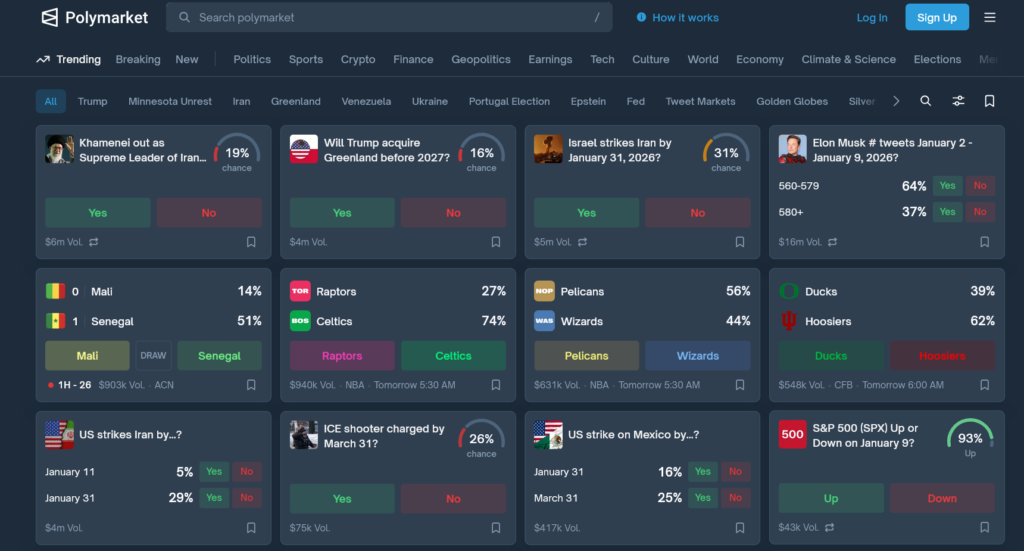
Polymarket is a prediction market platform where people can bet on the outcomes of real world events using cryptocurrency. Think of it as a stock market, but instead of buying shares in companies, you’re buying shares in whether something will happen or not.
The platform operates on the Polygon blockchain and uses USDC, a stablecoin pegged to the US dollar, for all transactions. This means you need a crypto wallet and some USDC to get started, but the good news is that USDC’s value stays stable, unlike Bitcoin or other volatile cryptocurrencies.
When you place a bet on Polymarket, you’re essentially buying “Yes” or “No” shares for a specific event. If you’re right when the event resolves, your shares become worth $1 each. If you’re wrong, they become worthless.
Why People Use Prediction Markets?
Prediction markets like Polymarket have gained massive popularity because they often predict outcomes more accurately than traditional polls. The platform saw record trading volumes of over $10 billion in November 2025 alone.
The markets cover everything from politics and economics to sports and entertainment. You can bet on election outcomes, whether certain legislation will pass, economic indicators, and even pop culture events.
The Legal Journey: From Ban to Regulatory Approval
Here’s where things get interesting. Polymarket wasn’t always legal in the United States, and understanding this history is crucial to evaluating its legitimacy.
In 2022, the Commodity Futures Trading Commission (CFTC) hit Polymarket with a $1.4 million fine for operating an unregistered derivatives trading platform. The company was forced to block all US users and could only serve international customers for nearly four years.
Fast-forward to July 2025, and everything changed. Both the US Department of Justice and the CFTC formally ended their investigations into Polymarket without bringing any new charges. This was a huge turning point for the platform’s legitimacy.
How Polymarket Became Fully Legal?
To operate legally in the United States, Polymarket made some major moves:
- Acquired QCEX, a CFTC licensed derivatives exchange and clearinghouse, for $112 million
- Obtained regulatory approval from the CFTC to legally operate within the United States
- Received a no action letter from the CFTC in September 2025 exempting them from certain reporting requirements
- Announced their official return to the US market in December 2025
The platform officially relaunched for US customers on December 2, 2025, ending the nearly four year prohibition. This regulatory approval is what truly makes Polymarket a legitimate platform today.
Is Polymarket Safe? What Users Are Saying
Now that we’ve established Polymarket is legal, let’s talk about whether it’s actually safe to use. The answer is more nuanced than a simple yes or no.
User reviews on Trustpilot paint a mixed picture. Some users report great experiences with the platform, saying their educated guesses get rewarded and they’ve had no problems. However, others have raised serious concerns about withdrawal difficulties and questionable market resolutions.
The platform has a medium risk trust score of around 64.6 according to some review sites, indicating it’s better than a scam but not entirely without risk. Community opinions on platforms like Reddit are similarly divided, with some appreciating the transparency while others express frustration with certain market outcomes.
Polymarket Pros and Cons Comparison
| Aspect | Positive Points | Concerning Points |
|---|---|---|
| Regulation | CFTC approved and fully legal in US since 2025 | Was banned for 4 years; had regulatory issues |
| Trading Volume | Record $10B+ monthly volume shows strong activity | High volume doesn’t guarantee individual success |
| Fees | Very low fees (0.01% taker fee on regulated version) | Network gas fees and deposit costs still apply |
| Transparency | Blockchain based; all transactions are public | Some users report unfair market resolutions |
| User Experience | Many report positive experiences | Withdrawal issues reported by some users |
Understanding the Real Risks
The biggest concerns from users revolve around market resolution disputes and withdrawal problems. Some traders have claimed that certain markets were resolved unfairly, with outcomes that didn’t match reality.
Polymarket uses the UMA oracle system to resolve markets, which allows anyone to propose a result by posting a bond. If unchallenged within 2 hours, it’s accepted. While this decentralized approach has benefits, it can sometimes lead to controversial outcomes.
Should You Use Polymarket? The Verdict
Polymarket is absolutely a legitimate and legal platform in 2026, especially now that it has full CFTC approval. The company has gone through the proper regulatory channels and invested over $112 million to operate legally in the United States.
However, “legitimate” doesn’t mean “risk-free.” Like any form of trading or betting, you can lose money on Polymarket. The platform itself is real and regulated, but that doesn’t guarantee you’ll make profitable trades or never encounter issues.
The massive trading volumes, over $10 billion monthly, show that serious traders trust the platform enough to put significant money at risk. The blockchain technology provides transparency that traditional betting platforms can’t match, since all transactions are publicly verifiable.
Who Should Consider Using Polymarket
If you’re interested in prediction markets and comfortable with cryptocurrency, Polymarket offers a legitimate way to participate. The low fees (just 0.01% on taker orders) and high liquidity make it attractive for serious traders.
Just remember to start small, do your research on each market before trading, and never bet more than you can afford to lose. Read the resolution criteria carefully for each market to understand exactly what outcome will trigger a “Yes” or “No” result.
Frequently Asked Questions
Is Polymarket legal in the United States?
Yes, Polymarket is fully legal in the United States as of December 2025. The platform acquired a CFTC licensed derivatives exchange and received regulatory approval to operate legally after being banned from 2022 to 2025.
Do I need cryptocurrency to use Polymarket?
Yes, you need USDC (a stablecoin pegged to the US dollar) to trade on Polymarket. You’ll also need a cryptocurrency wallet to connect to the platform, though Polymarket can create one for you when you sign up.
What fees does Polymarket charge?
The regulated US version of Polymarket charges a 0.01% taker fee on trades. You’ll also pay small network gas fees (typically $0.10 to $0.50) for transactions on the Polygon blockchain. Deposits and withdrawals may incur additional network fees.
Can Polymarket be trusted with withdrawals?
While Polymarket is a legitimate platform, some users have reported withdrawal difficulties and delays. The platform operates on blockchain technology where you control your wallet, which provides some security, but customer service response times have been criticized by some users.
How does Polymarket resolve markets?
Polymarket uses the UMA oracle system to determine market outcomes. Anyone can propose a result by posting a bond, and if it’s unchallenged within 2 hours, the proposal is accepted. If challenged, UMA token holders vote on the correct outcome. Only winning outcome shares can be redeemed for USDC after resolution.
