
There’s a real buzz in New York right now, you can feel it. The mayoral race has officially hit its peak, and the city’s alive with talk about who’s going to come out on top.
Between Zohran Mamdani’s surge, Andrew Cuomo’s comeback energy, and Curtis Sliwa’s wildcard presence, this isn’t your typical local election it’s a showdown everyone’s watching.
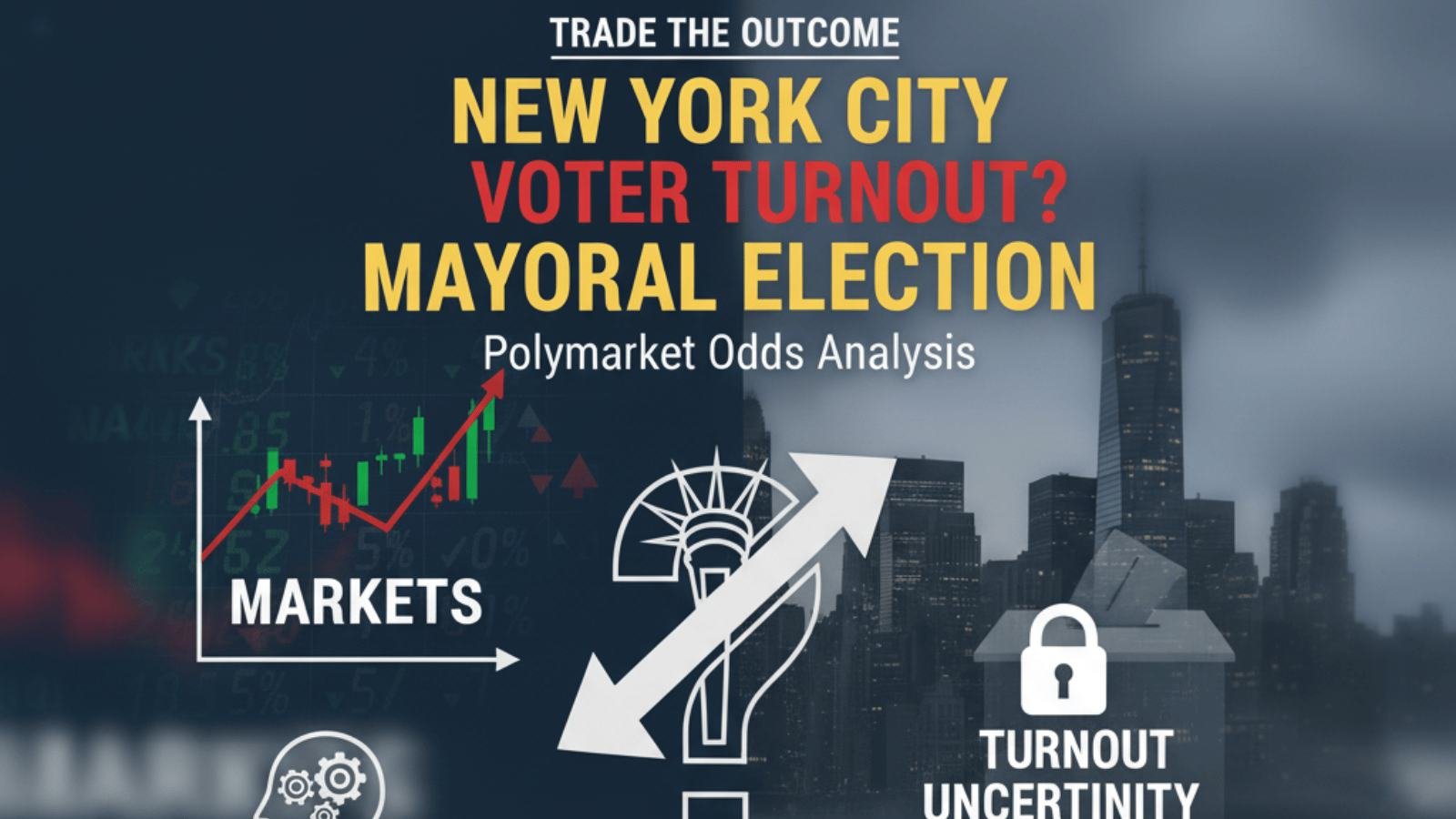
What really has my attention, though, is the voter turnout. New Yorkers are fired up this year, and prediction markets like Polymarket are lighting up with activity. The question is: how many people will actually show up, and what does that tell us about the odds?
I’ve been digging into the data, comparing the Polymarket trends with real-world numbers and past elections, and the patterns are fascinating.
So let’s break it all down, the stats, the sentiment, and what the markets might be hinting at for Election Day.
Why Turnout Matters This Year
First, why is everyone watching turnout so closely in 2025? Past NYC mayoral elections, excepting presidential years, have almost always hovered around 1 million votes or fewer. But 2025 isn’t like most years:
- Competitive candidates across party lines
- Fiercer-than-usual debate over policy priorities
- National attention on NYC’s political direction
Already, over 735,000 New Yorkers cast ballots during just nine days of early voting. Election officials and analysts now project the total number of voters could surpass 1.9 million, closing in on historic highs not seen since the 1969 Lindsay vs Buckley race, which drew a massive 2.6 million voters.
The driving force behind this is the most captivating and fiercely competitive general election for mayor since 2001, one senior pollster explained.
What Polymarket Says About NYC Turnout?
Prediction markets like Polymarket let the crowd wager on real-world outcomes with real money. As Election Day approaches, the “Turnout in Next New York City Mayoral Election?” market has been heating up:
Polymarket odds as of November 3, 2025:
- 36% or higher: 76-78% chance
- 33-36%: 14-17%
- 30-33%: ~3%
- 27-30%: 1.9-2.5%
- Below 27%: Less than 1%
With over $228,000 USD bet in this market, these odds signal a strong consensus: Turnout is overwhelmingly expected to beat 36% of registered voters, a threshold not seen in recent local NYC races.
Odds Table
| Turnout Bracket | Market-Implied Probability |
|---|---|
| 36%+ | 76–78% |
| 33–36% | 14–17% |
| 30–33% | 2.9%–9% |
| 27–30% | 1.9%–3% |
| Under 27% | <1% |
Let’s Put Those Numbers in Context
To translate percentages, what does 36% turnout mean in actual votes?
NYC boasts around 5.2 million registered voters in 2025.
- 36% turnout: Over 1.87 million votes
- Recent elections:
- 2021 (Bloomberg vs. Green): about 1 million votes
- Peak: 1969’s 2.6 million votes
So, if the market is right, this could be a historically large showing. Several election analysts are echoing these projections, with some estimates at 1.9–2 million votes by close of polls, and that doesn’t even count absentee ballots!
Why Is Turnout Expected to Be So High?
Several unique factors are driving participation up:
- High-profile candidates: Andrew Cuomo and Zohran Mamdani are well-known and polarizing, drawing in voters from both moderate and progressive camps.
- Sizzling issues: Housing, public safety, and the cost of living have been front-and-center, resonating with families and young professionals.
- Open race dynamics: With widespread competition and no incumbent, more New Yorkers feel their vote is decisive.
- Early voting surge: Over 735,000 votes cast before Election Day hints at motivated, energized voters.
Polling experts agree: “As turnout rises, it tends to skew more moderate and attracts independents,” one pollster said which could help Cuomo as an independent and temper Mamdani’s strong base.
Polymarket vs. Polls
Recent Quinnipiac and Fox polls peg interest and projected turnout as “historic” for a local race, with some showing Mamdani leading Cuomo by double digits—but most pollsters admit their biggest uncertainty is turnout, not intent.
That’s where prediction markets shine, aggregating wisdom from those actually willing to bet their own money on real outcomes.
Unlike polls, prediction markets are fast to react to late-breaking trends:
- Reports of record early voting fuel “36%+” shares
- Surge in youth turnout spikes higher brackets
- Any Election Day disruptions could quickly swing the odds, creating a real-time crowd forecast
What Will Happen on Election Night?
By the time polls close, expect the outcome to fall in one of two camps:
- A new turnout record (likely over 1.85 million votes): Most likely, as suggested by both Polymarket and early voting data
- A result rivaling the famed 1969 contest: If energy stays high through Election Day
Final turnout also shapes the winner’s mandate, a big total benefits the eventual mayor.
The Big Picture
NYC’s 2025 mayoral election is shaping up to be one for the history books, not just because of the fierce campaigning, but because so many New Yorkers are expected to make themselves heard at the ballot box. If Polymarket is any guide, the city could see a turnout that rewrites modern records.
Stay tuned and check out the latest market odds on Polymarket for real-time updates.
And when you see those election night crowds or hear about lines at the polls, you’ll know you heard it here first: the wisdom of the crowd pointed the way.
My 2 Cent Friendly Advice
If you’re a New Yorker, don’t let predictions and odds be the only story be part of the story! No matter what the numbers say, your vote is what actually decides the outcome and impacts the future of the city.
- If you haven’t voted yet, take advantage of early options or plan your Election Day so you don’t get caught in those long lines.
- Don’t get discouraged by stats about turnout higher or lower, every ballot counts the same, and sometimes close races get decided by those last-minute votes.
- Even if you’re just following along for fun or betting on Polymarket, remember: prediction markets are exciting, but real civic participation is priceless.
Bottom line: Whether you love polling, betting, or simply want a better NYC, make sure your voice is heard.
Don’t let the crowd’s wisdom replace your own gut feeling go vote, and tell your friends to do the same!
